Introduction: Why This Matters
The Cummins ISX is a workhorse engine used in heavy-duty trucks and commercial vehicles across North America. While the stock Variable Geometry Turbocharger (VGT) offers emissions compliance and throttle response benefits, many owners and fleet operators find themselves asking:
“Is it worth keeping the factory VGT, or should I upgrade to a fixed geometry turbo?”
In this guide, we explore the downsides of the VGT, why a turbo conversion might be the right move, and how it can lead to improved reliability, fuel economy, and performance.
What is a VGT Turbo and How Does It Work?
The Role of a Turbo in a Diesel Engine
Turbos increase engine power and efficiency by forcing more air into the combustion chamber. In a standard turbo setup, boost levels increase proportionally with engine speed.
What Makes a VGT Different?
A Variable Geometry Turbo (VGT) adjusts the angle of internal vanes to control exhaust flow. This allows:
-
Faster spool-up at low RPMs
-
Controlled boost pressure
-
Emissions optimization (especially for EGR and DPF systems)
But despite its engineering, VGT systems—especially on the Cummins ISX—can be more of a liability than an asset.
Common Problems with the Cummins ISX VGT Turbo
Many ISX users face frequent and expensive problems, especially after the 500,000-mile mark. These include:
1. Actuator Failures
The VGT actuator is an electronic component that controls vane position. It is prone to:
2. Soot and Carbon Build-Up
Exhaust soot clogs the vanes inside the VGT over time, leading to:
-
Sticking or seizing vanes
-
Loss of boost
-
Fault codes such as P2563, P003A, and P003B
3. Turbo Overspeeding or Surge
When the VGT can’t properly regulate pressure, overspeed can occur—damaging the turbine and compressor wheels.
4. Complex ECM Calibration Issues
Incorrect calibration or worn actuators result in derated engines or limp mode conditions. You’ll often see:
Why Replace the Factory VGT with a Fixed Geometry Turbo?
Switching to a non-VGT or fixed geometry turbo (commonly known as a turbo conversion) offers multiple technical and performance advantages.
1. Simplified Mechanics = Fewer Failures
A fixed turbo has no actuator, moving vanes, or electronic parts to fail. It’s a more durable, old-school solution that thrives in harsh, real-world conditions.
2. Enhanced Reliability & Reduced Downtime
Turbo conversion kits significantly reduce unexpected failures and roadside breakdowns. This is a huge benefit for:
3. Increased Power and Torque
With a properly tuned ECM and supporting upgrades, fixed turbos can deliver:
-
Lower exhaust gas temperatures (EGTs)
-
Improved fuel economy (by 5–10% in many setups)
-
Cleaner, more responsive throttle
4. Emissions System Delete Options
Many kits pair with EGR deletes and DPF bypasses, giving you:
-
Lower soot production
-
Better exhaust flow
-
Cooler engine operation
⚠️ Note: These modifications are intended for off-road, competition, or export use. Always verify compliance with local and federal emissions regulations.
What’s Included in a Typical Cummins ISX Turbo Conversion Kit?
TurboConversionKits.com offers kits that include:
-
High-performance fixed geometry turbocharger
-
Turbo manifold (cast or stainless options)
-
Oil feed and drain lines
-
Boost piping and clamps
-
Optional EGR delete components
-
Tuning recommendations or access to custom ECM programming
Who Should Consider Replacing Their VGT Turbo?
Turbo conversion isn’t for everyone, but it’s an excellent choice if you are:
-
A fleet operator seeking to lower total cost of ownership
-
An owner-operator frustrated with repeated VGT issues
-
A diesel performance enthusiast
-
Operating your engine in export, agricultural, racing, or off-road settings
Real-World Results: What Customers Are Saying
“Swapped my VGT with a conversion kit from TurboConversionKits.com. Truck runs cooler, pulls harder, and I haven’t had a single check engine light since.”
– Mike D., Owner-Operator, Ohio
“We converted three ISX trucks in our fleet. Reduced maintenance costs by over 40% last year.”
– Fleet Manager, Midwest Logistics
Frequently Asked Questions (FAQs)
Q1: Will my fuel economy improve with a turbo conversion?
Yes—most users report a 5–10% improvement due to better airflow and ECM tuning.
Q2: Will I lose low-end torque without the VGT?
With the right turbo size and tune, fixed turbos can maintain or even improve low-end performance.
Q3: Is it plug-and-play?
Most kits include all hardware. Basic mechanical skills and tools are required. ECM tuning may be needed.
Conclusion – Is a Turbo Conversion Worth It?
If you’re tired of recurring turbo failures, high repair costs, and ECM headaches, replacing your factory VGT turbo with a conversion kit is one of the smartest upgrades you can make to your Cummins ISX engine.
You’ll gain:
-
Increased reliability
-
Better performance
-
Lower long-term costs
Explore our Cummins ISX Turbo Conversion Kits and transform the way your truck performs.

 Turbocharger for Cummins HE431V 4045933
1 × $1,160.00
Turbocharger for Cummins HE431V 4045933
1 × $1,160.00 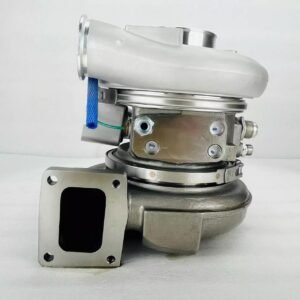 HY55V Turbocharger for 2007+ Iveco Truck | NEW Replacement for 3791620, 4046943, 4046944
1 × $1,232.50
HY55V Turbocharger for 2007+ Iveco Truck | NEW Replacement for 3791620, 4046943, 4046944
1 × $1,232.50 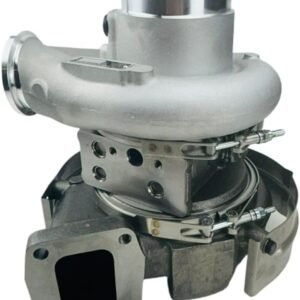 HE400VG | Cummins Engine | PC360-10
1 × $1,740.00
HE400VG | Cummins Engine | PC360-10
1 × $1,740.00  Turbocharger 4309076 | Replacement for HE561V, 4045031, 5350611, 495010
1 × $1,087.50
Turbocharger 4309076 | Replacement for HE561V, 4045031, 5350611, 495010
1 × $1,087.50 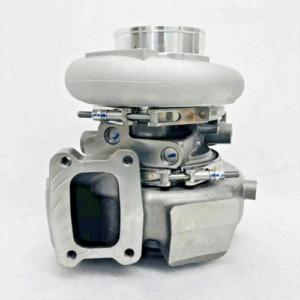 HE351V Turbocharger 3798327 for Cummins Engine | OEM-Quality Performance
1 × $1,305.00
HE351V Turbocharger 3798327 for Cummins Engine | OEM-Quality Performance
1 × $1,305.00 